Introduction
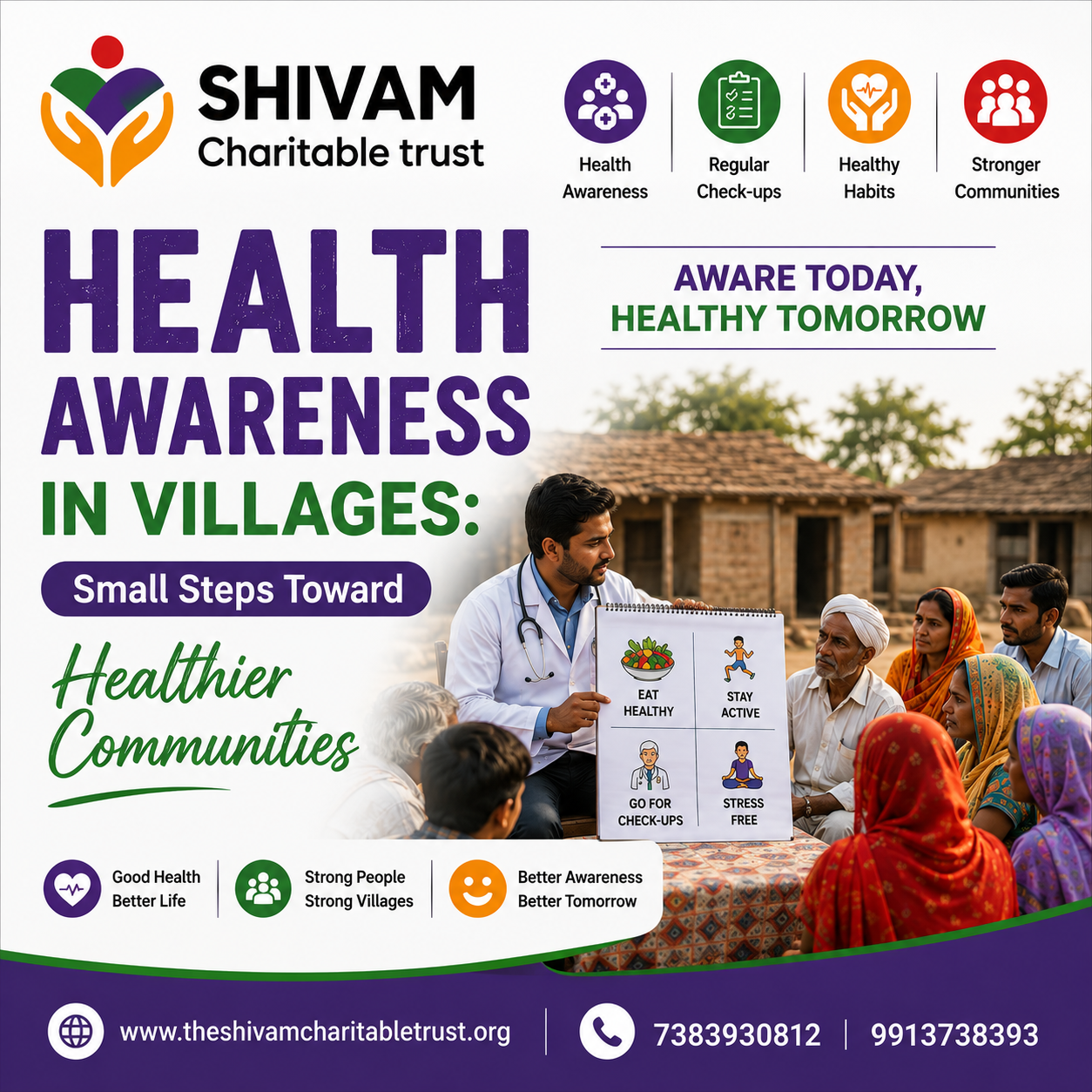
Health Awareness in Villages is an important part of building healthier and stronger communities.
Healthcare is not only about treating illness after it occurs. It is also about helping people understand their health, recognize potential risks, adopt healthier habits and seek appropriate medical care when needed.
For many rural communities, access to healthcare can be affected by distance, awareness, availability of services and other social factors. The World Health Organization emphasizes that primary healthcare should bring essential health services closer to people’s everyday environments and focus on health promotion, disease prevention, treatment and community empowerment.
This makes Health Awareness in Villages an important area of community service.
Shivam Charitable Trust works across healthcare, education and community welfare. Its official project information includes health check-ups for underprivileged people, free eye check-ups and surgeries, diabetes awareness, sickle-cell initiatives and education support.
The purpose of such work is not simply to organize an event.
It is to create awareness that can continue within the community long after the activity is completed.
Why Health Awareness in Villages Matters
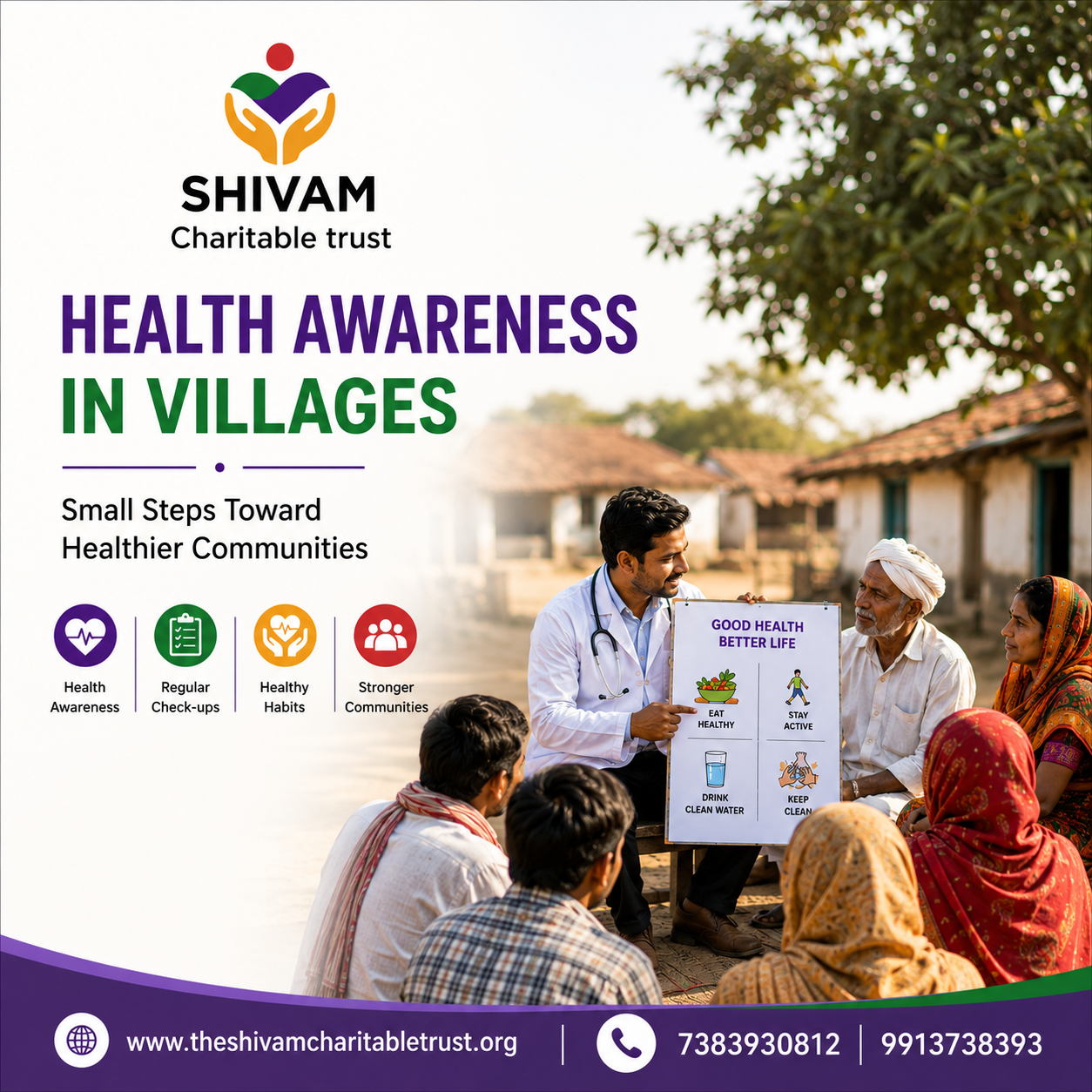
Rural communities can have unique healthcare needs.
People living in villages may sometimes need to travel significant distances to reach healthcare facilities. In some situations, lack of awareness may also cause people to delay health checks or professional consultation.
WHO highlights that people living in rural and remote areas can experience health inequities related to social and environmental conditions and weaker healthcare systems.
This makes community-based healthcare awareness valuable.
Health Awareness in Villages can encourage people to take simple but important steps:
- Understand common health risks
- Participate in suitable health screenings
- Learn about preventive healthcare
- Adopt healthier daily habits
- Recognize when professional medical advice is needed
- Encourage family members to take care of their health
The objective is not to create fear.
The objective is to create knowledge and confidence.
Understanding Rural Healthcare Needs
Every community is different.
A village may have a higher need for diabetes awareness. Another may need greater attention to eye care. A different community may need awareness about sickle cell disease, nutrition, women’s health or senior citizen care.
Therefore, successful Health Awareness in Villages should begin by understanding local needs.
Community-based organizations can listen to residents, schools, local leaders and families to identify important health concerns.
This can make health initiatives more relevant.
For example, Shivam Charitable Trust’s project portfolio includes health check-ups for underprivileged people, free eye check-ups and surgeries, and sickle-cell support in tribal Gujarat.
These initiatives demonstrate how different communities can require different forms of healthcare support.
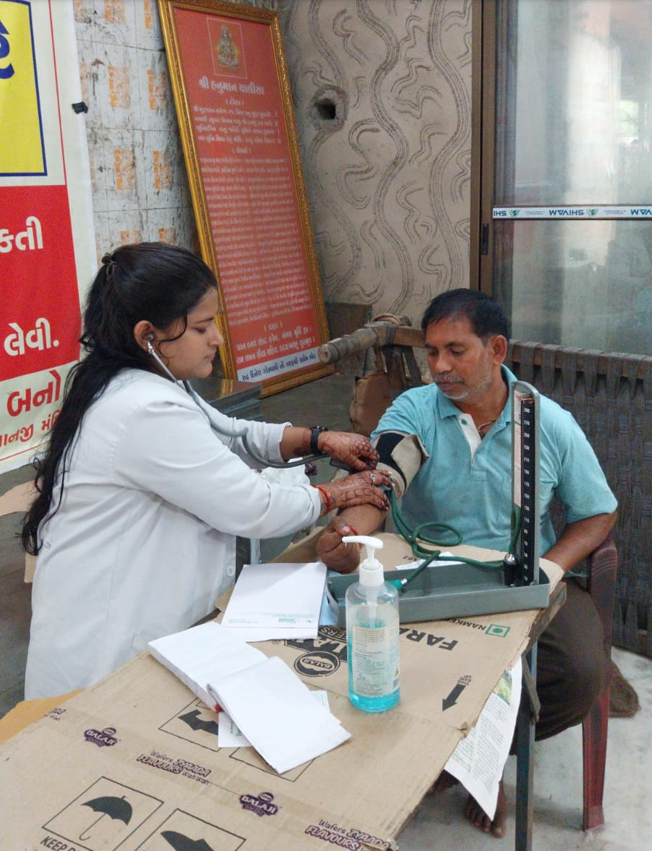
The Importance of Preventive Healthcare
Preventive healthcare focuses on taking appropriate action before a health problem becomes more serious.
This does not mean that every disease can be prevented.
Instead, it means encouraging people to understand their health and use appropriate screening and healthcare services.
WHO describes primary healthcare as an approach that includes health promotion, prevention, early detection and treatment, while also empowering individuals and communities.
For villages, preventive health awareness can include:
- Healthy eating habits
- Physical activity
- Hygiene awareness
- Appropriate health screening
- Diabetes awareness
- Blood-pressure awareness
- Eye-care awareness
- Women’s health education
- Children’s health and nutrition
- Timely professional consultation
The earlier people become aware of their health, the more opportunities they may have to take appropriate action.
That is one of the key goals of Health Awareness in Villages.
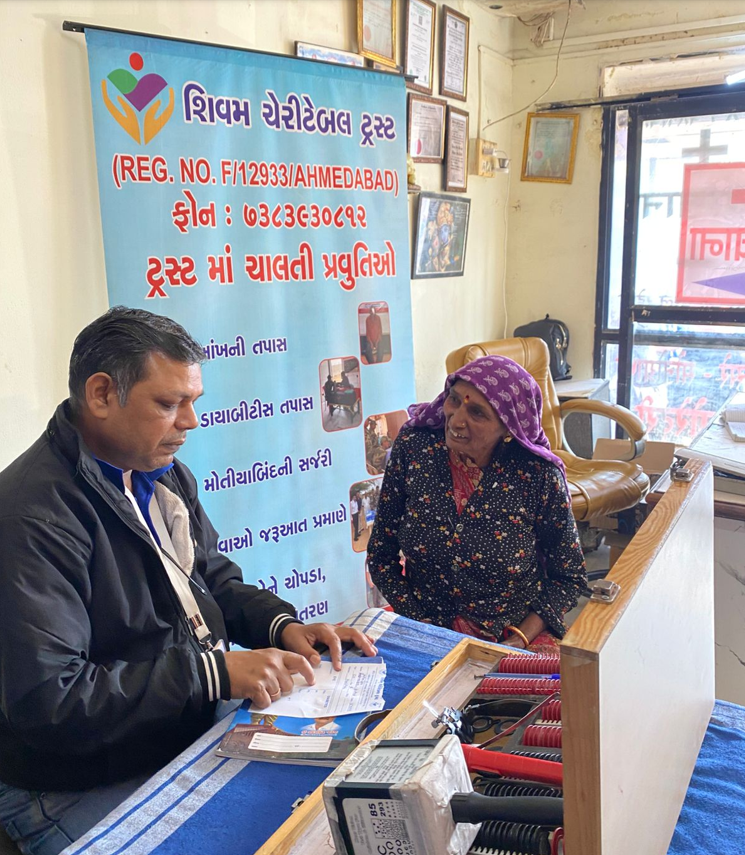
Free Health Check-Up Camps in Villages
Health check-up camps can bring healthcare awareness closer to rural communities.
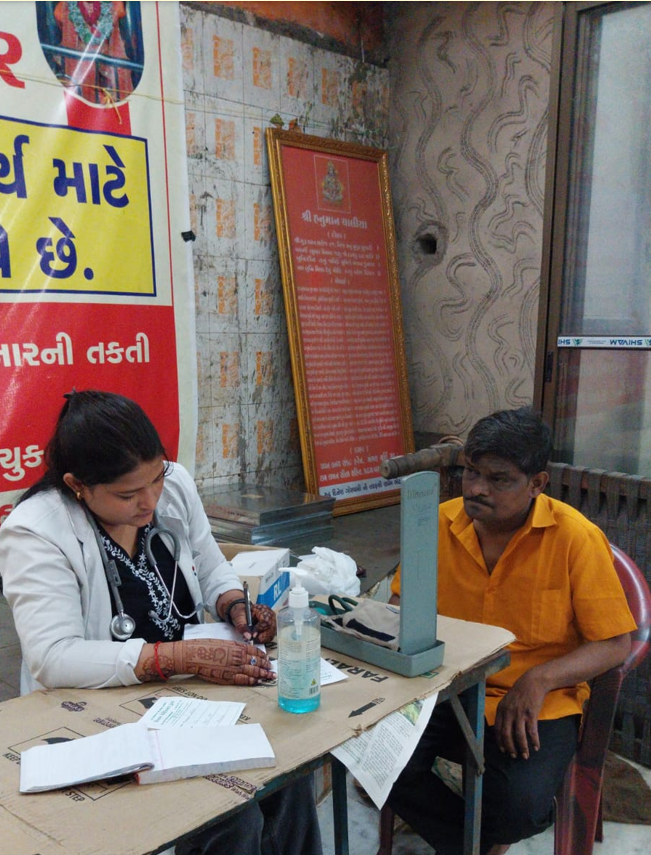
Shivam Charitable Trust’s official projects page lists Health Checkups for Underprivileged People as an ongoing initiative started in 2013.
A community health camp can provide an opportunity for people to interact with healthcare professionals and understand areas of their health that may require further attention.
Depending on the specific program, health camps may include general health assessments or screening activities.
However, a health camp should not be considered a replacement for regular medical care.
Screening results should be interpreted appropriately, and people with concerning results should be guided toward qualified healthcare professionals for further evaluation.
This makes community health camps most effective when they combine:
Screening + Awareness + Guidance + Follow-Up
A single check-up can identify a concern.
Awareness can help people understand what to do next.
Diabetes Awareness in Rural Communities
Diabetes is one of the health conditions where awareness can make an important difference.
Some people may not recognize that they have elevated blood glucose, especially during the early stages.
Shivam Charitable Trust operates Defeat Diabetes, an ongoing health initiative focused on diabetes awareness. The Trust’s official project information states that the initiative started in 2019 in the Gujarat Frontier.
Diabetes awareness in villages can focus on simple messages:
- Understand diabetes risk factors
- Maintain healthy eating habits
- Stay physically active
- Follow medical advice
- Participate in appropriate screening
- Understand the importance of follow-up
The goal is not self-diagnosis.
The goal is to encourage awareness and appropriate medical consultation.
Health Awareness in Villages becomes stronger when health information is explained in simple, understandable language.
Eye Care and Vision Awareness
Good vision supports education, work, mobility and independence.
However, eye problems can sometimes remain unnoticed until they significantly affect daily life.
Shivam Charitable Trust lists Free Eye Checkups & Surgeries as an ongoing initiative that began in 2014. The Trust describes its work in villages and tribal belts of Gujarat.
Community eye-care initiatives can help people understand the value of regular eye examinations.
For children, good vision can support learning.
For working adults, it can support productivity and independence.
For senior citizens, maintaining eye health can contribute to safer and more independent daily living.
This makes eye awareness an important component of Health Awareness in Villages.
Appropriate examination and treatment should always be provided through qualified eye-care professionals.
Supporting Senior Citizens in Villages
Senior citizens can have different healthcare needs compared with younger adults.
As people age, regular monitoring and timely professional healthcare become increasingly important.
Rural communities may benefit from health-awareness programs that encourage families to pay attention to the health and well-being of older adults.
A community initiative can encourage awareness around:
- Regular health check-ups
- Medication adherence
- Nutrition
- Physical activity appropriate to the individual
- Vision and hearing concerns
- Mobility and fall prevention
- Social connection
The purpose is not to create a complicated healthcare plan.
It is to encourage families to notice health changes and seek suitable professional guidance.
Caring for older adults is also a reflection of a community’s compassion.
Women’s Health Awareness
Women’s health is another important part of rural healthcare.
Women may often place family responsibilities ahead of their own health.
A community health initiative can help create conversations about the importance of preventive care and appropriate professional consultation.
Women’s health awareness can cover areas such as:
- General health check-ups
- Nutrition
- Reproductive health
- Anemia awareness
- Preventive screening
- Maternal health
- Mental well-being
The information should always be delivered respectfully and by appropriate healthcare professionals where medical advice is involved.
Shivam Charitable Trust also lists women empowerment among its community initiatives, reflecting a broader focus on strengthening women and communities.
Health and empowerment can work together.
A woman who has better access to reliable health information can make more informed decisions for herself and her family.
Children’s Health and Nutrition
Children represent the future of every village.
Good nutrition, healthy habits, regular education and appropriate healthcare can support children’s development.
Health awareness for children can include simple subjects such as:
- Personal hygiene
- Healthy food
- Physical activity
- Clean drinking water
- Sleep
- Oral health
- Eye health
- When to tell an adult about a health problem
Schools can become valuable partners in this process.
Shivam Charitable Trust also has an ongoing children-focused education initiative, which highlights the relationship between education and community development.
When healthcare awareness and education come together, children can learn healthy habits that may remain useful throughout their lives.
Health Education and Healthy Habits
Health awareness is most effective when people can understand and apply it in everyday life.
A village health session does not have to be complicated.
Simple messages can be powerful.
For example:
Eat balanced food.
Stay physically active.
Maintain personal hygiene.
Take health symptoms seriously.
Get appropriate health checks.
Follow qualified medical advice.
Do not delay professional care when it is needed.
WHO describes primary healthcare as a people-centred approach that empowers individuals, families and communities to take charge of their health.
This is the heart of Health Awareness in Villages.
Health education should help people feel empowered rather than overwhelmed.
Reaching Underserved Communities
One of the greatest strengths of community healthcare is its ability to move closer to people.
Instead of expecting everyone to travel to a distant facility, awareness activities and health camps can be organized closer to where communities live.
WHO has documented examples in India where mobile primary-healthcare services have helped bring check-ups and treatment closer to remote populations.
This does not mean that every village requires the same model.
It means that healthcare delivery should consider the realities of the community.
Shivam Charitable Trust’s project portfolio includes initiatives for underprivileged people and tribal communities in Gujarat.
Reaching underserved communities is therefore an important part of its broader social-service approach.
The Role of Shivam Charitable Trust
Shivam Charitable Trust follows the principle of service beyond self.
Its official website describes work spanning healthcare, education, BSF welfare, diabetes awareness, eye care, sickle-cell initiatives, women empowerment and other community activities.
The Trust’s rural healthcare activities are particularly relevant to Health Awareness in Villages.
Its health-checkup initiative began in 2013, while its free eye-care initiative began in 2014, according to the Trust’s official project information.
Its sickle-cell initiative in tribal Gujarat began in 2016, and Defeat Diabetes began in 2019, according to the same official project listing.
These different initiatives demonstrate an important principle:
There is no single definition of community healthcare.
Some communities need screening.
Some need awareness.
Some need eye care.
Some need support for chronic conditions.
Some need education.
The right social initiative begins by understanding the people it aims to serve.
10 Powerful Steps Toward Healthier Villages
1. Organize Regular Health Awareness Programs
Create simple, understandable sessions on common health concerns.
2. Encourage Appropriate Health Check-Ups
Help people understand why timely health screening can be valuable.
3. Promote Diabetes Awareness
Encourage awareness about diabetes risk, screening and healthy lifestyle habits.
4. Strengthen Eye-Care Awareness
Promote appropriate eye examinations and professional care.
5. Focus on Women’s Health
Create respectful spaces where women can learn about preventive healthcare.
6. Support Senior Citizens
Encourage families to pay attention to the health and well-being of older adults.
7. Teach Children Healthy Habits
Schools and families can work together to build lifelong healthy habits.
8. Reach Underserved Areas
Take appropriate health-awareness initiatives closer to communities that face access challenges.
9. Encourage Community Volunteers
Local volunteers can help connect health initiatives with residents.
10. Focus on Long-Term Awareness
A successful health initiative should create knowledge that remains useful after the camp or event is over.
How Volunteers Can Support Rural Health
Community healthcare cannot depend only on doctors and organizations.
Volunteers can also play a valuable supporting role.
They can help with:
- Event organization
- Community communication
- Registration
- Awareness activities
- Educational sessions
- Documentation
- Local outreach
- Connecting people with available programs
Volunteers should not provide medical advice unless appropriately qualified.
Their role is to support the healthcare team and community process.
Shivam Charitable Trust provides volunteering opportunities through its website and encourages people to participate in its healthcare, education and community initiatives.
The involvement of local volunteers can make Health Awareness in Villages more connected to the community.
Building Long-Term Community Impact
The success of a health initiative should not be measured only by how many people attended.
A more meaningful question is:
What changed after the initiative?
Did people become more aware of diabetes?
Did someone finally schedule an eye examination?
Did a family learn more about healthy nutrition?
Did a senior citizen receive appropriate follow-up care?
Did children begin practicing better hygiene?
Did the community become more comfortable discussing healthcare?
These changes may not always be immediately visible.
But they can represent meaningful social impact.
This is why consistent Health Awareness in Villages is so important.
One activity can begin a conversation.
Repeated awareness can turn that conversation into a habit.
And healthier habits can contribute to healthier communities.
Why Community Participation Matters
Health awareness works best when communities participate rather than simply receive information.
Local residents understand their own challenges.
They know which issues are most important.
They know which communication methods are easiest to understand.
They also know how to involve families, schools and local groups.
WHO’s approach to primary healthcare emphasizes empowering individuals, families and communities to participate in their own health and well-being.
This principle can make rural health programs more practical and sustainable.
A health-awareness initiative should therefore be built with the community, not only for the community.
Frequently Asked Questions
What is Health Awareness in Villages?
Health Awareness in Villages means educating rural communities about preventive healthcare, healthy habits, common health risks and the importance of appropriate medical care.
Why is rural health awareness important?
Rural communities can face healthcare-access challenges related to distance, availability and social conditions. Community-based awareness can help people understand their health and seek appropriate care.
Does Shivam Charitable Trust conduct health programs in villages?
Yes. The Trust’s official project information includes health check-ups for underprivileged people and describes healthcare work in rural and tribal communities.
Does Shivam Charitable Trust provide eye-care support?
Yes. The Trust lists Free Eye Checkups & Surgeries as an ongoing project and describes its work in villages and tribal belts of Gujarat.
What is DEFEAT DIABETESE?
DEFEAT DIABETESE is Shivam Charitable Trust’s diabetes-awareness initiative, listed by the Trust as an ongoing project started in 2019.
Can volunteers support village health initiatives?
Yes. Volunteers can support suitable activities such as community outreach, event organization and awareness programs. Shivam Charitable Trust provides volunteer information through its official website.
Is a health camp a replacement for regular medical care?
No. Health camps and screenings can support awareness and early identification, but people with health concerns should seek appropriate evaluation and care from qualified healthcare professionals.
Conclusion
Health Awareness in Villages is not just about organizing a medical camp.
It is about creating knowledge, encouraging healthy habits and helping people understand when professional healthcare may be necessary.
A village becomes healthier when families understand prevention.
Children learn healthy habits.
Women have access to reliable health information.
Senior citizens receive appropriate attention.
People become aware of diabetes and other chronic conditions.
Eye-care needs are recognized.
And communities become more comfortable discussing their health.
Shivam Charitable Trust’s healthcare initiatives demonstrate how community service can address different needs through health check-ups, eye-care support, diabetes awareness and other programs.
The journey toward healthier villages does not require one enormous step.
It can begin with a simple conversation.
A health-awareness session.
A check-up.
A child learning a healthy habit.
A family deciding not to ignore a health concern.
A volunteer choosing to serve.
A community choosing to care.
Small steps can create healthier communities.
And when those small steps are repeated with compassion, consistency and community participation, they can become a powerful force for positive change.
Healthier People. Stronger Villages. A Better Future.
https://theshivamcharitabletrust.org/
https://www.who.int/india/health-topics/primary-health-care