
Winter brings warm sweaters, cozy jackets, and comfortable clothing for many families. However, for children from financially disadvantaged backgrounds, staying warm during cold weather can be a daily challenge. While some children receive new winter clothes every year, others may struggle to access even basic protective clothing.
As children grow, their favorite sweaters, jackets, hoodies, and warm trousers often become too small. These clothes may remain unused in wardrobes despite being in excellent condition.
Instead of allowing them to go to waste, families can give these items a meaningful second life through winter clothes donation.
At Shivam Charitable Trust, the philosophy of “Service Beyond Self” encourages compassion, community responsibility, and practical support for people in need.
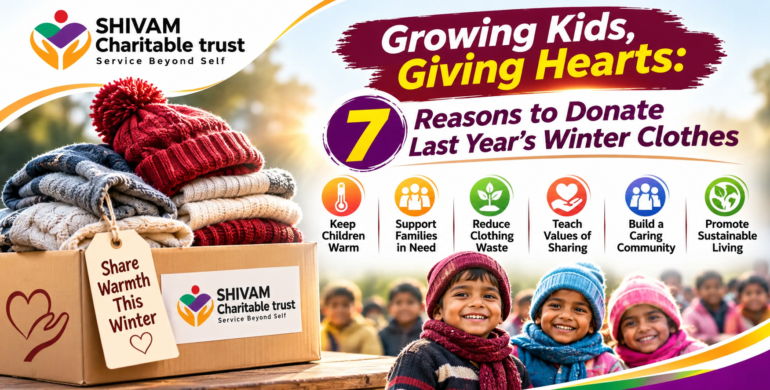
Here are seven important reasons why donating last year’s winter clothes can make a meaningful difference.

1. Help Underprivileged Children Stay Warm
Cold weather can be especially difficult for children who lack suitable winter clothing.
Families facing financial challenges may struggle to purchase sweaters, jackets, socks, and other seasonal essentials.
Donating clean, comfortable, and properly fitting winter clothes can help children stay warmer during school, outdoor activities, and everyday routines.
A jacket that no longer fits your child may still be useful to another child of a smaller size.
Before donating, ensure every item is clean, wearable, and suitable for the local weather.
A simple act of giving can bring comfort to a child who needs it.
2. Give Outgrown Clothes a Second Life
Children grow quickly, and clothes that fit perfectly one winter may become too small the next.
Many parents store these items because they are still in good condition.
Unfortunately, unused clothing often occupies wardrobe space without serving any practical purpose.
Winter clothes donation offers an opportunity to extend the useful life of sweaters, hoodies, jackets, and warm trousers.
Rather than discarding wearable items, families can pass them on to children who can use them.
This approach transforms an everyday household decision into an act of generosity.
3. Reduce Financial Pressure on Families
For low-income households, purchasing winter clothing for multiple children can create additional financial pressure.
Parents must often prioritize food, education, housing, and essential healthcare expenses.
Seasonal clothing may become difficult to afford when household budgets are already stretched.
Donating gently used winter wear can help reduce some of these expenses.
When children receive appropriate warm clothing, families may be able to direct limited resources toward other important needs.
Although clothing donations cannot solve financial hardship, they can provide valuable practical assistance.
Supporting one child can also bring relief to an entire family.
4. Teach Children the Value of Sharing
Donating winter clothes is not only about helping others. It also creates an opportunity to teach children compassion and social responsibility.
Parents can involve their children in selecting sweaters, jackets, and other items they have outgrown.
Explain how these clothes may help another child stay comfortable during winter.
Encourage children to choose items that are clean, undamaged, and suitable for reuse.
This simple family activity can help children understand the importance of generosity, gratitude, and respecting other people’s needs.
When children participate in meaningful acts of kindness, they begin to recognize that sharing can positively affect someone else’s life.
5. Promote Sustainable and Responsible Living
Clothing production requires materials, energy, water, and transportation.
Throwing away wearable garments unnecessarily adds to textile waste and increases demand for replacement products.
Donating usable winter clothes can extend their lifespan and support more responsible consumption.
Reusing a jacket or sweater means making better use of resources already invested in its production.
Families can also encourage children to care for their belongings so they remain suitable for future use.
Winter clothing donations combine social responsibility with environmental awareness.
However, heavily damaged, unhygienic, or unsafe clothing should not be donated.
6. Support Children’s Comfort and Confidence
Suitable winter clothing helps children participate more comfortably in everyday activities.
A warm sweater or properly fitting jacket may make travelling to school, attending classes, and spending time outdoors more manageable.
Children deserve clothing that supports their comfort without making them feel different or embarrassed.
Donation programmes should therefore prioritize dignity, appropriate sizing, cleanliness, and respectful distribution.
Offering good-quality clothing rather than unwanted or unusable items helps ensure that donations provide genuine value.
When children feel comfortable and appropriately dressed, they may participate more confidently in daily routines.
7. Inspire Communities to Share Warmth
A single family donating winter clothes can make a difference, but collective participation can extend that support further.
Neighbours, schools, residential societies, offices, and community groups can encourage responsible clothing collection.
Families can sort garments by age and size, check their condition, and coordinate with organizations that can identify genuine needs.
Shivam Charitable Trust’s commitment to community welfare reflects the importance of working together to support vulnerable populations.
Community participation can turn unused winter clothing into practical assistance for children who need it.
Most importantly, organized donations should respond to actual requirements rather than simply collecting large quantities of clothes.
When communities share resources thoughtfully, kindness becomes collective action.
Conclusion: Small Clothes Can Bring Big Warmth
Children outgrow their winter clothes, but the usefulness of those garments does not have to end.
A sweater, jacket, or hoodie from last winter may still provide warmth and comfort to another child.
By donating clean and wearable clothing, families can support children in need, reduce unnecessary waste, and teach younger generations the importance of compassion.
At Shivam Charitable Trust, the guiding message of “Service Beyond Self” reminds us that meaningful social change often begins with simple acts of kindness.
This winter, take a moment to check your child’s wardrobe. Those outgrown winter clothes may still have an important purpose.
Your child may have outgrown their winter clothes, but those clothes can still bring warmth to another child’s life.
Shivam Charitable Trust – Service Beyond Self.
Website: https://theshivamcharitabletrust.org/
https://theshivamcharitabletrust.org/?utm_source=chatgpt.com
https://theshivamcharitabletrust.org/projects/?utm_source=chatgpt.com